
K-1 Visas for Same-Sex Couples from the Philippines | BusyBodyVisa
By BusyBodyVisa | Updated 2026
The K-1 fiancé visa process for same-sex couples is legally identical to any other K-1 petition. Since Obergefell v. Hodges in 2015, USCIS has treated same-sex couples exactly the same as opposite-sex couples on paper. But if you are a gay American man trying to bring a Filipino partner to the United States, the process is anything but straightforward — and most of what’s written about it was written by people who have never actually worked one of these cases.
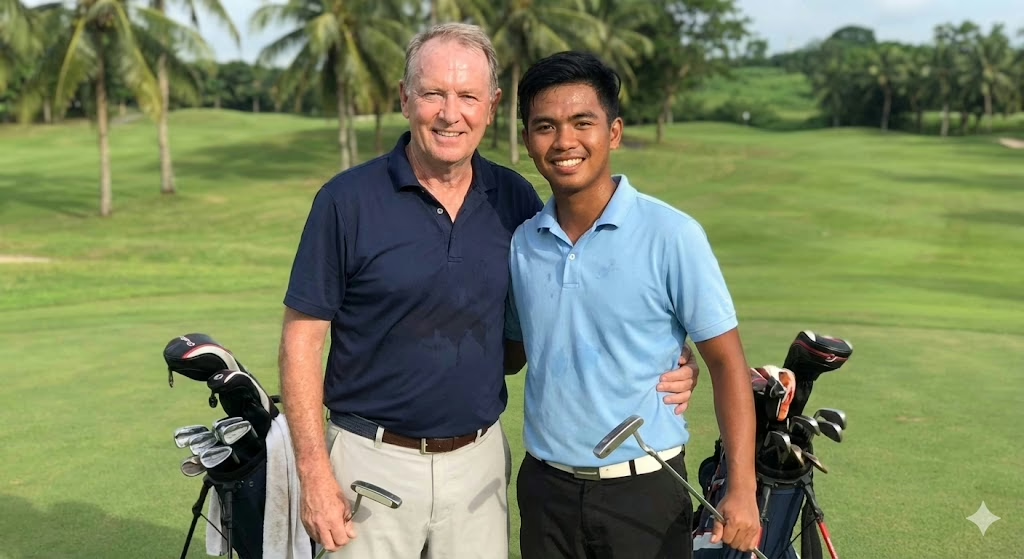
I have. I’m an American who has lived in the Philippines for over a decade. I’ve helped same-sex couples navigate this process from both sides of it. Here is what you actually need to know.
You Probably Met on an App, and That’s Fine with a Caveat
Whether it’s “people you might know” on Facebook or your ‘friend’ made you join a ‘gay westerners for Filipinos’ Facebook group as a joke, if you’re in a relationship with a guy from the Philippines, chances are high you met online, usually Facebook or Instagram from what I’ve seen. There’s nothing wrong with that but make sure you save your data.
That last fight you had? Don’t get lost in emotion and start trying to erase him from your life. You’ll need those chats and silly screencaptures of your video calls to prove the relationship is bona fide (that means legit) later.
You also need to make sure you have photos with his friends and family! Not just him. If his family won’t see you (which is pretty rare in 2026), then at least take pictures with his friends. If he won’t introduce you to anybody in his inner circle, then a K-1 visa is the least of your problems.
Legal Issues for Same-Sex Couples
As you probably already know, the Philippines does not recognize same sex marriage. The good news is you can still get married in the US. The most common workaround is to get married online in Utah. Once that happens, you can apply for a CR-1 marriage visa.
That being said, I tend to steer same-sex couples towards the K-1 rather than CR-1, it’s faster, and you don’t have to worry about the marriage not being recognized in the Philippines.
If you chose the Utah route, please read my article for filing an I-130 petition with an online marriage, as there are additional steps, or book a consultation with me.
I also have a quiz to determine which is better for you a K-1 or CR-1 spousal visa
The Truth About “I’m Discreet”
In 2026 this is pretty rare. A provinciano Filipino may not have a pride flag hanging in their bedroom wall but to be totally closeted doesn’t happen that often and yes that includes Mindanao, I’ve lived there.
Most Filipinos live in tight quarters, their family members know they’re speaking in English and it’s to a male.
More often than not, “I’m discreet” is just an excuse not to introduce you to his inner circle. A Filipino who won’t introduce you to his friends and family is not a Filipino in love.
The Age Gap Issue
Some people try to shame older gay men for seeking younger partners. Don’t worry about that here. Large age gaps are common and the US embassy in Manila is used to it.
I’ve been here long enough to say that a Filipino is perfectly willing to love someone twice his age so long as you treat him right.
If you have a significant age gap and a limited paper trail because of a private relationship, you have two compounding issues that need to be addressed head-on rather than hoped away.
The Transgender Issue
If your partner is transgender, there are realities you need to accept before you file anything.
For both the US K-1 process and the Philippine CFO (Commission on Filipinos Overseas) process, your partner will need to use the sex assigned at birth on all documentation. The Philippines does not legally recognize gender change, so his passport and all official documents will reflect his birth sex regardless of how he lives his life or how he presents publicly.
I understand this is painful for some couples. But trying to work around this or advocate for an exception will not help your case. Inconsistent documentation between how your partner presents and what his official records say is exactly the kind of discrepancy that triggers additional scrutiny.
The practical advice is simple: get everything aligned with the official documents from day one and don’t introduce complexity that doesn’t need to be there. Your relationship is already navigating enough.
If this is your situation, a consultation before you file anything is especially important. The documentation strategy for a transgender partner requires some additional thought that a standard K-1 checklist won’t cover.
What the Visa Interview Actually Looks Like
Your Filipino partner will interview at the US Embassy in Manila. Consular officers are professional, and the process post-Obergefell is routine at this point. The interview is not where most same-sex cases run into trouble. The trouble usually comes earlier, in the I-129F adjudication when USCIS requests evidence or issues a Request for Evidence (RFE) because the initial documentation was thin.
A well-prepared case with strong documentation rarely gets an RFE. A case filed by someone who thought the legal equality meant the practical challenges had also disappeared almost always does.
The CFO Process: The Step Most People Forget
Before your Filipino partner can board a plane to the United States, he has to attend a CFO seminar. The Commission on Filipinos Overseas requires this of any Filipino emigrating on a K-1 or immigrant visa. It’s essentially a government briefing designed to make sure Filipinos leaving the country understand what they’re getting into.
It’s not difficult but it’s not optional either. Without the CFO sticker in his passport he won’t be allowed to board the flight, and I’ve seen couples find this out at the airport. Don’t be that couple.
The process involves registering online, attending a one-day seminar in person (usually in Manila or Cebu), and paying a small fee. He’ll receive a guidance and counseling certificate, and the sticker goes in his passport. That’s it.
For same-sex couples, there’s one thing worth knowing. The CFO seminar is designed around the assumption that a Filipina is leaving to marry a foreign man. Your partner may be the only gay person in the room. The content is generic and nobody is going to make an issue of it, but it’s worth preparing him mentally so he’s not caught off guard by the heteronormative framing.
If your partner is transgender, as mentioned above, he will attend under his legal documentation. Plan accordingly.
Schedule the CFO seminar well in advance. Availability in Manila books up and you don’t want a seminar date delaying a departure that’s already been months in the making.
Why You Probably Need a Consultant
Most K-1 petitions are filed without professional help and many of them succeed. But same-sex Philippine cases are not most K-1 petitions. The combination of cultural complexity, documentation challenges, and the specific scrutiny that comes with any case that looks unusual to an adjudicator makes professional guidance worth serious consideration.
More importantly, you need someone who has actually worked these cases, not a general immigration attorney who did one same-sex K-1 fifteen years ago, and not a document mill that treats your case like every other K-1 in their system.
I’ve worked these cases. I know what the documentation gaps look like before they become denials. I know what the Manila embassy is looking for and what it is not. And I know the specific situations a different approach than the standard checklist.
Ready to talk about your case? I offer a paid consultation for gay men pursuing a K-1 visa for a Filipino partner. No free consultations — my time and your situation both deserve better than that. If you’re serious about getting this right, get in touch here.
Leave a Reply
You must be logged in to post a comment.